In the current Melbourne event landscape, your biggest competitor isn't another charity or a rival conference - it is your audience's desire to stay at home. Whether you are a corporate planner or a charity organiser, the challenge is identical: how do you prove that being in your room is more valuable than the time they are giving up?
To do this, we have to look at two different ways of thinking: solving a professional headache for corporate guests and creating a personal connection for donors.
The Corporate Perspective: It’s Not About the Invite, It’s About the Problem
For corporate events, we often get bogged down in demographics like job titles and company size. But people don't attend events because of who they are; they attend because of the problems sitting on their desks. As outlined in our guide on The New Rules of Event Marketing, your communications should not focus on the "what" (the venue or the catering) but on the "why".
- Find the specific pain point: Instead of a general update, address a real challenge, like how a Marketing Manager balances a tight budget with high growth expectations.
- Offer a focused solution: Position the session as a way to walk away with a specific framework or answer, rather than just "networking".
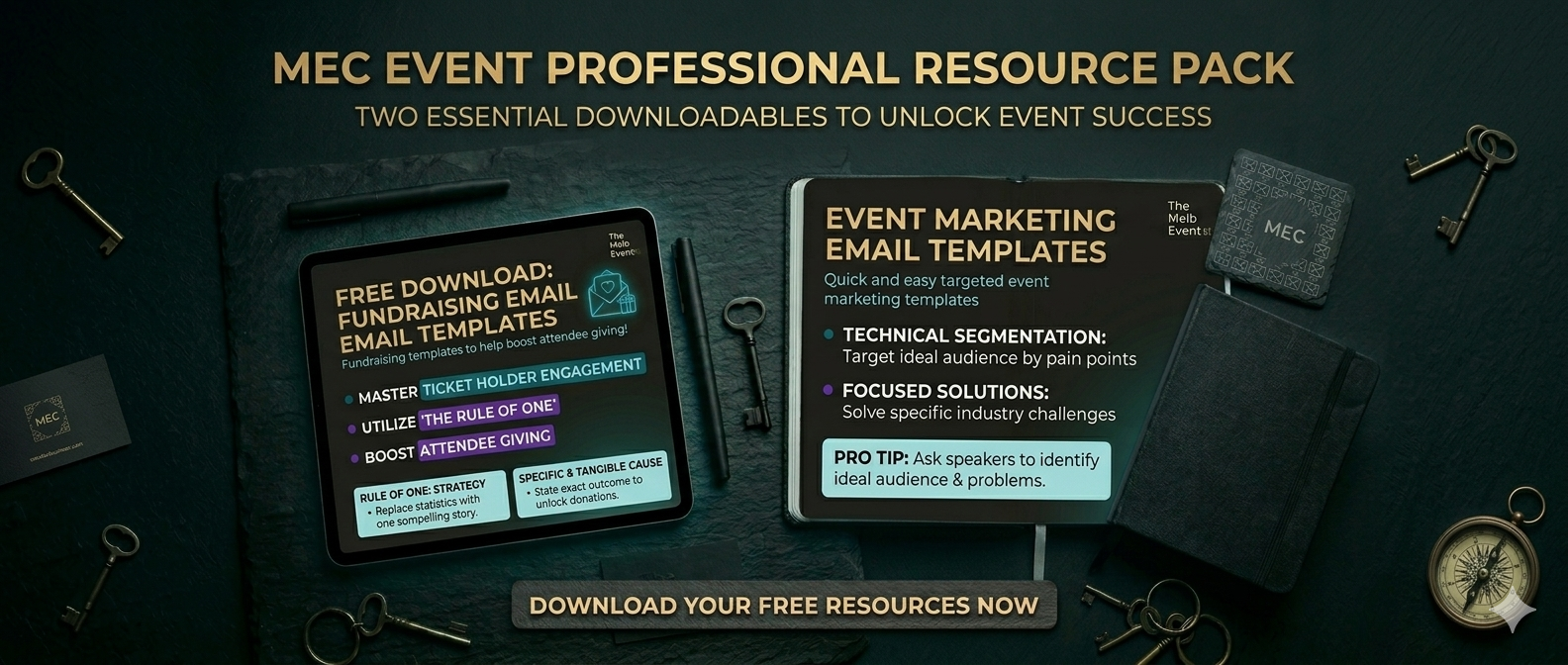
If you want to see how this looks in practice, our Event Marketing Email Templates show you how to lead with the "Why".
The Fundraising Shift: Making it Personal for the "Plus One"
Charity events have a unique hurdle: the "Guest of a Guest". They are there because a friend asked them, not because they already love your cause. To reach them, you have to move past the big statistics and find the human story. Our article Beyond the Email Blast: High-Yield Fundraising Strategies for a Numb Database explores this in more detail, but for no:.
- Focus on one person: Use "The Rule of One" to tell a single, compelling story that creates an immediate emotional link.
- Start the conversation early: Don't wait for the gala dinner to make your pitch. Use your lead-up emails to share the impact they are about to have.
You can find the exact scripts for these moments in our Fundraising Email Templates.
The Common Thread: Value First, Logistics Second
Regardless of the audience, the best marketing treats the attendee’s time with respect.
- Get the basics right, then get out of the way: Make sure the registration is seamless so you can focus on the "Moments that Matter".
- Be incredibly specific: Instead of saying you "support the community," tell them exactly what $50 buys, like a counselling session for a teenager in need.
- Lean on your experts: Ask your speakers or beneficiaries what problems they are actually solving; they are the best resource for making your marketing feel authentic.
By combining the logic in our Event Marketing Email Templates and Fundraising Email Templates. , you can ensure your event isn't just another date in the calendar, but an investment your guests are actually excited to make.
.png?width=200&height=200&name=The%20Melb%20Event%20(1).png)
.png?width=1700&height=800&name=New%20Blog%20Post%20sizes%20(2).png)
.png?width=48&height=48&name=Untitled%20design%20(30).png)
